Plant-animal interactions in the Southeast US
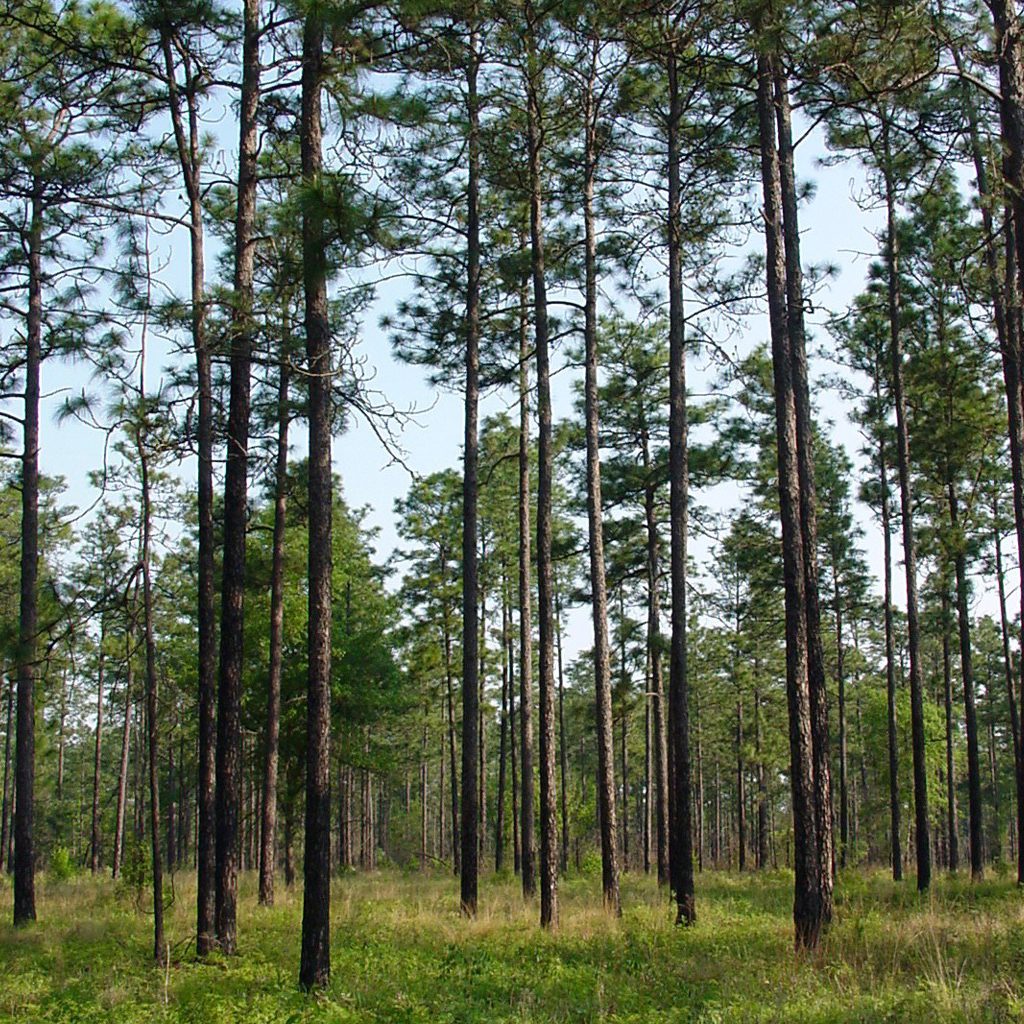
Seeds produced by trees such as pines and oaks are an important but highly variable food resource for vertebrates such as mice. We study how variation in resource availability drives consumer population dynamics and broader community dynamics, and we study how seed predation by consumers affects plants. We are lucky to do this research in the panhandle of Florida, one of the richest biodiversity hotspots in North America.
Functional ecology
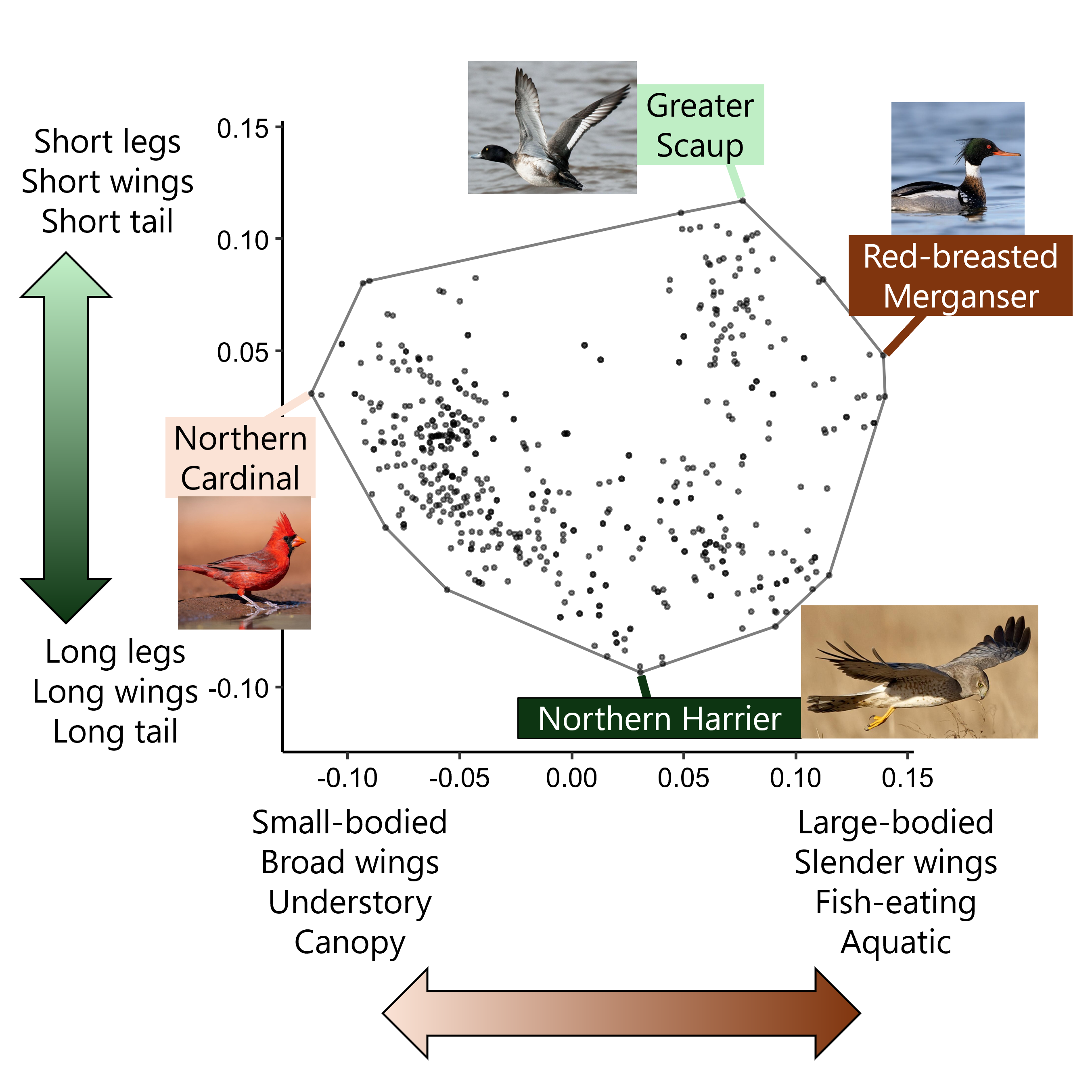
Species play particular roles within their communities and ecosystems, such as seed dispersers, seed predators, herbivores, scavengers, and pollinators. In addition to studying specific functions, we can also use functional traits to describe the functional diversity of entire communities. We are interested in understanding how changing communities alter ecological functions across scales, from species traits to local communities to regional biotas.
Comparing community composition
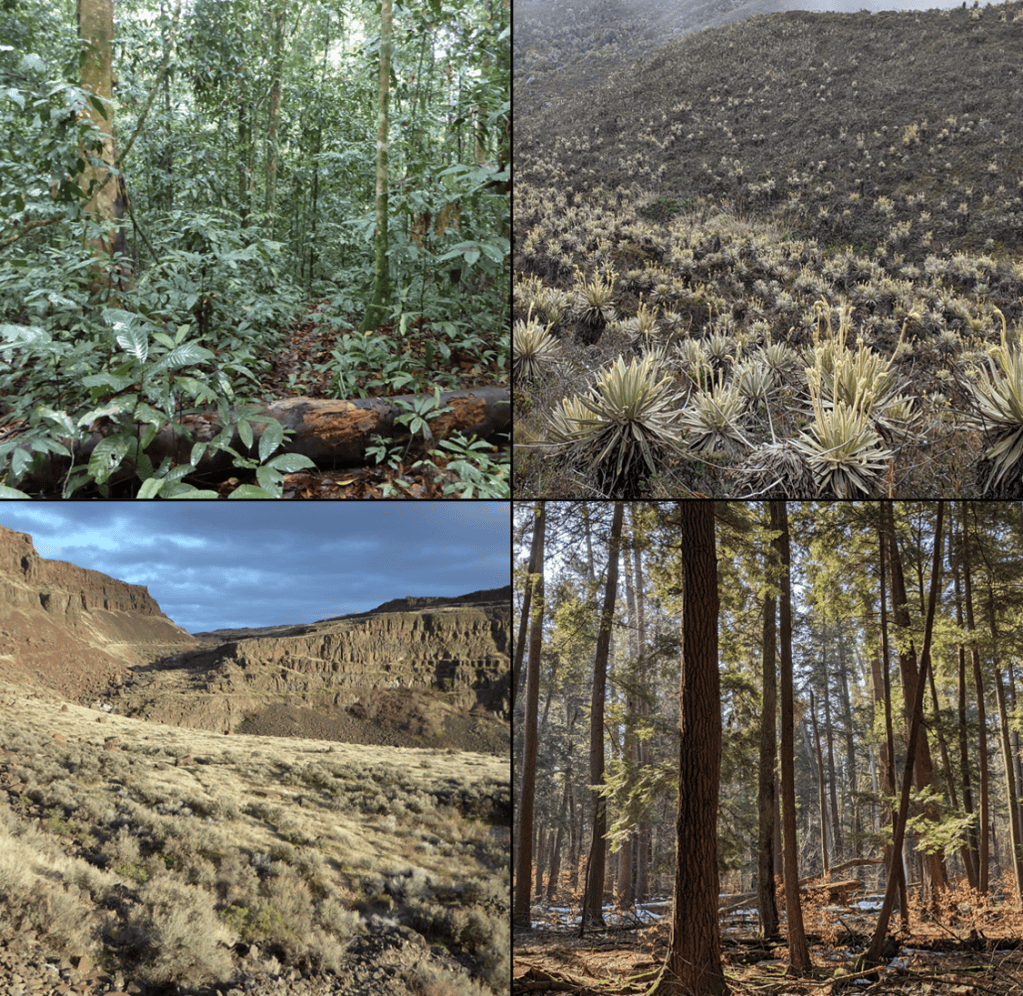
Anthropogenic global change is driving massive changes in ecological communities through processes including population declines, range shifts, and species introductions. To understand these effects, we need the tools to compare the composition of multiple communities. These comparisons may be across space, such as describing the homogenization of communities across sites, or across time, such as monitoring the long-term impacts of management actions on a community. Communities can also be compared not just in terms of species composition but also functional composition.
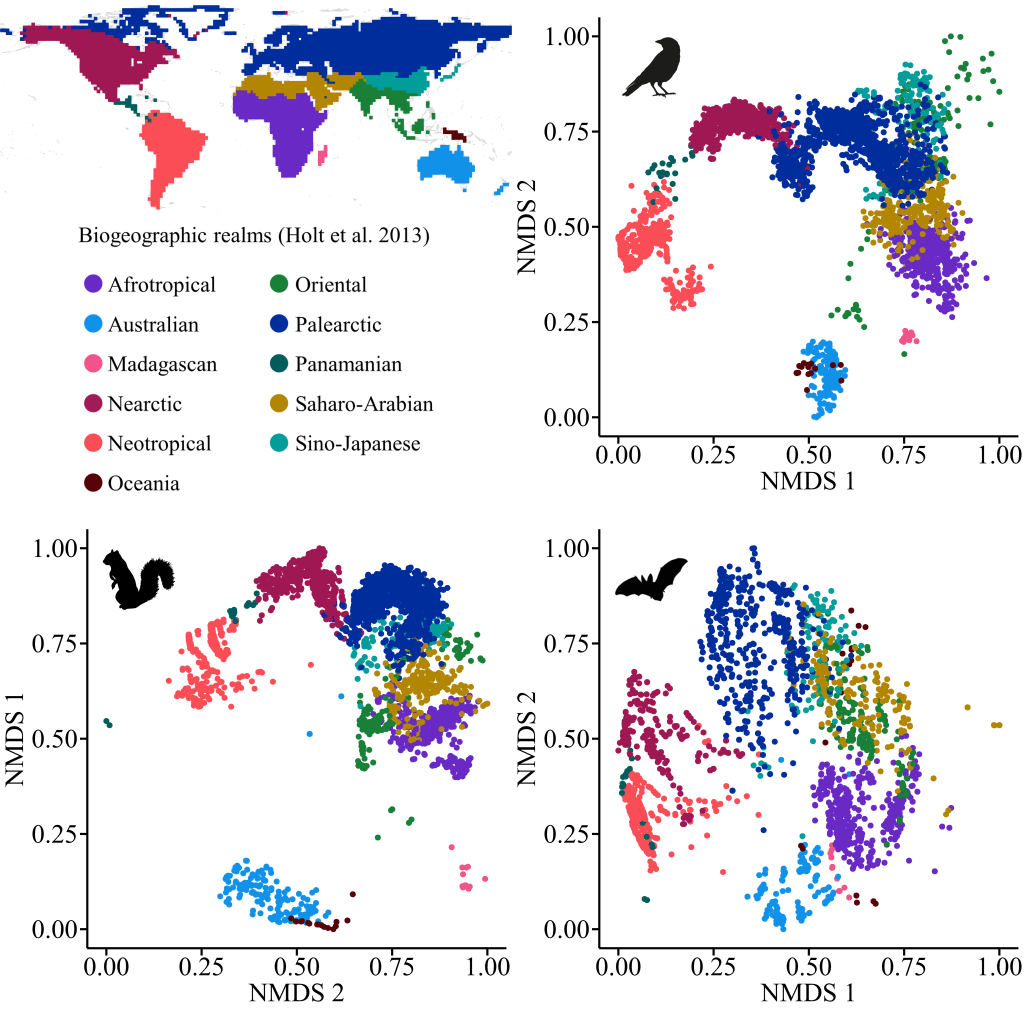
Biogeography and global biodiversity
Biogeography is more than a system of categorizing the world’s biota. Biogeographic regions reflect the degree of shared evolutionary history at the community level. By quantifying the degree of biogeographic isolation, we can study how isolation may lead to divergent patterns of biodiversity.